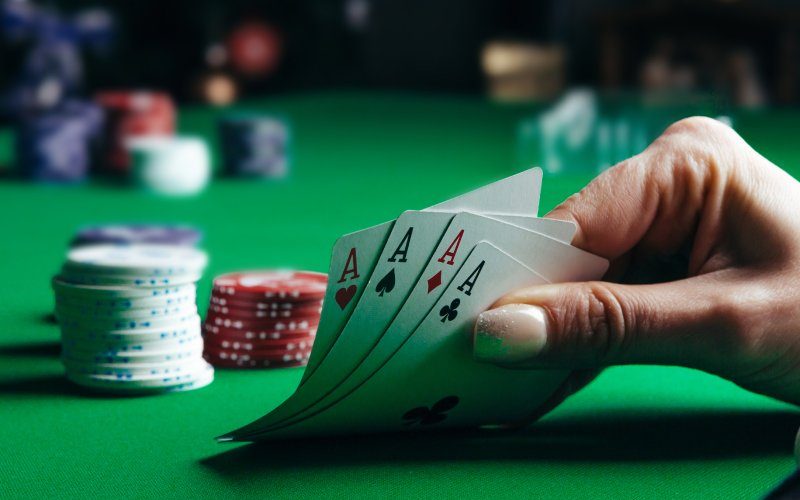
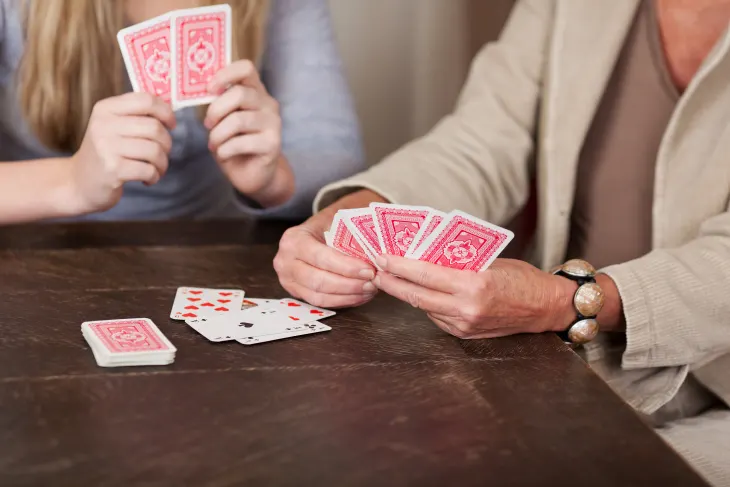
Modern party planning often revolves around elaborate setups, streaming music playlists, and complicated board games with sprawling instruction manuals. Yet, when people gather in a living room, around a kitchen island, or at a patio table, some of the best social experiences come from the simplest tools imaginable. A standard fifty-two-card deck remains the ultimate entertainment powerhouse, capable of transforming a quiet evening into a night of laughter, playful deception, and spirited competition.
Choosing the right game can make or break a social gathering. You want something that requires minimal explanation time, accommodates variable player counts, and keeps everyone engaged without dragging out into endless turns. Whether you are hosting a casual game night, a holiday family get-together, or an impromptu weekend hangout, here are the classic card games that deserve a permanent spot at every party.
Spades: The Ultimate Partnership Test
Few games generate as much friendly banter and tactical intensity as Spades. Originating in the United States during the nineteen thirties, this trick-taking card game is designed specifically for four players competing in two partnerships. Sitting across from your partner means you must rely on non-verbal cues, shared strategy, and accurate predictions of your collective hand strength.
The objective of Spades is straightforward: each partnership bids on the exact number of tricks they expect to win during a round. Spades always serve as the permanent trump suit, meaning any spade card beats any card from another suit regardless of numerical rank. The tension builds as players realize they must balance winning enough tricks to meet their bid while avoiding extra tricks, known as sandbags, which accumulate and eventually trigger a penalty.
Why It Works for Parties
-
Engaging Team Dynamics: Playing with a partner fosters natural communication and shared celebration when a risky bid pays off.
-
Scalable Intensity: Casual groups can play to a modest score limit, while competitive tables can track bags and nil bids rigorously.
-
Endless Replayability: Every hand deals a completely different puzzle, ensuring no two games ever feel identical.
President: A Social Hierarchy Built on Strategy
Also known by alternative colloquial names like Scum or Asshole, President is a fast-paced shedding game where the social hierarchy of the room directly translates into the rules of the game. The overarching goal is simple: be the first player to get rid of all the cards in your hand. However, the game truly shines because of what happens in subsequent rounds.
At the end of each round, players are crowned with titles based on the order in which they finished. The first person to empty their hand becomes the President, while the last person becomes the Scum or Poor. For the next round, the Scum must hand over their two highest cards to the President in exchange for their two lowest cards, while the President holds the ultimate positional advantage. This playful shifting of power creates hilarious social dynamics and intense underdog redemption arcs.
Core Elements of Play
-
Shedding Mechanics: Players must play single cards, pairs, or sequences that beat the previous play in rank.
-
Passing Power: The tax system between the President and Scum alters the starting hand strengths for every round.
-
Rapid Pacing: Rounds move quickly, making it easy for people to drop in or out between games.
Kings Corner: The Engaging Corner-Building Solitaire
Kings Corner takes the mechanics of traditional single-player solitaire and scales them up into a competitive multiplayer experience. It accommodates anywhere from two to four players and uses a standard deck. The layout features a central cross of four face-up cards, four corner spaces reserved exclusively for kings, and individual draw piles for each participant.
Players take turns drawing from their personal stack and attempting to play cards onto the tableau in descending alternating color order, mirroring classic solitaire rules. If you cannot make a move from your hand, you pass your turn. The first player to successfully empty their entire stockpile wins the game. It strikes a rare balance of being relaxing enough to allow casual conversation while requiring enough focus to spot clever tactical plays.
Strategic Highlights
-
Board Awareness: You must constantly scan the table to see if your moves accidentally open up advantageous pathways for your opponents.
-
Card Flow: Managing your draw pile efficiently dictates your speed and ultimate success.
-
Low Stress Atmosphere: The gameplay pacing allows guests to chat, snack, and socialize effortlessly while playing.
Slapjack: Pure Energy and Fast Reflexes
If your party needs an injection of high-energy chaos, Slapjack is the perfect choice. This game strips away complex strategy and math, replacing them with raw reaction time and hand-eye coordination. It works wonderfully for groups that include mixed ages or people who want a game that requires zero prior preparation.
The deck is dealt out evenly among all players face down. Participants take turns flipping the top card of their stack into a central pile. The moment a Jack appears in the center, everyone races to slap their hand down on the pile. The first person to make contact wins the entire pile of cards. The game continues until one player captures the entire deck. It is loud, chaotic, and guarantees bursts of laughter.
Tips for Playing Slapjack Safely
-
Establish Ground Rules: Remind guests to keep fingernails trimmed to avoid accidental scratches during competitive slaps.
-
Protect fragile tables: Play on a soft surface or a cloth game mat to soften the impact of fast-moving hands.
Hearts: The Art of Strategic Avoidance
Hearts is a classic trick-taking game that turns traditional card-playing logic completely upside down. Instead of trying to win every trick in sight, players actively try to avoid taking certain cards. Every heart card counts as a penalty point, and the dreaded Queen of Spades carries a massive penalty of thirteen points.
The game begins with a passing phase, where players hand off three unwanted cards to an opponent, setting up immediate tactical rivalries. If a daring player manages to capture all thirteen hearts and the Queen of Spades in a single round, a rare feat known as shooting the moon, their penalty score resets to zero while every other player receives a heavy point penalty.
Why Guests Love Hearts
-
Tactical Depth: You must track which high cards have been played to safely dump your dangerous penalty cards onto opponents.
-
Risk and Reward: Attempting to shoot the moon creates dramatic, high-stakes moments that captivate the entire table.
Frequently Asked Questions
How many players can comfortably participate in a standard card game night?
Most standard card games accommodate between four and six players, which is the ideal size for maintaining engaging conversation and keeping downtime between turns short and manageable.
Can we play these classic card games using a single standard deck of cards?
Yes, all of the featured games require only a standard fifty-two-card deck without any jokers or special expansions, making them accessible anywhere at a moment’s notice.
What is the best way to handle drink spills around a game table?
Using plastic coasters, keeping drinks on side tables rather than the main gaming surface, or using plastic-coated playing cards helps protect your deck from accidental liquid damage.
Are there good card games for large parties of ten or more people?
For larger groups, games like Mafia, Ultimate Werewolf, or casual poker tournaments work better than standard trick-taking games, as they accommodate high player counts simultaneously.
How do you prevent cards from sticking together during a party?
Keeping hands clean of sticky snack residue and using plastic-coated playing cards ensures smooth dealing and shuffling throughout the evening.
Can children easily participate in games like President and Spades?
Slapjack and basic matching games are great for younger children, while Spades and President involve score tracking and tactical bidding that are generally better suited for teenagers and adults.
What should I do if a card gets lost from the standard deck?
Always keep a couple of backup decks in your game drawer. Trying to play a standard card game with a missing card can throw off the mathematical balance and ruin the mechanics of the game.