Bingo is often perceived purely as a game of luck. Players sit in crowded halls or stare at digital screens, crossing their fingers as numbers are drawn one by one, trusting fate to deliver the elusive winning pattern. Yet underneath the flashing lights, casual chatter, and social atmosphere lies a rigid foundation of pure mathematics. Probability theory, combinatorics, and statistical analysis govern every single card printed and every ball drawn from the cage.
Understanding the mathematical principles behind bingo does not mean you can magically predict the next winning number, but it does demystify how the game works on a fundamental level. By examining how cards are constructed, how permutations function, and how probability shifts with every draw, players gain a much deeper appreciation for the underlying science of the game.
The Anatomy of a Standard Bingo Card
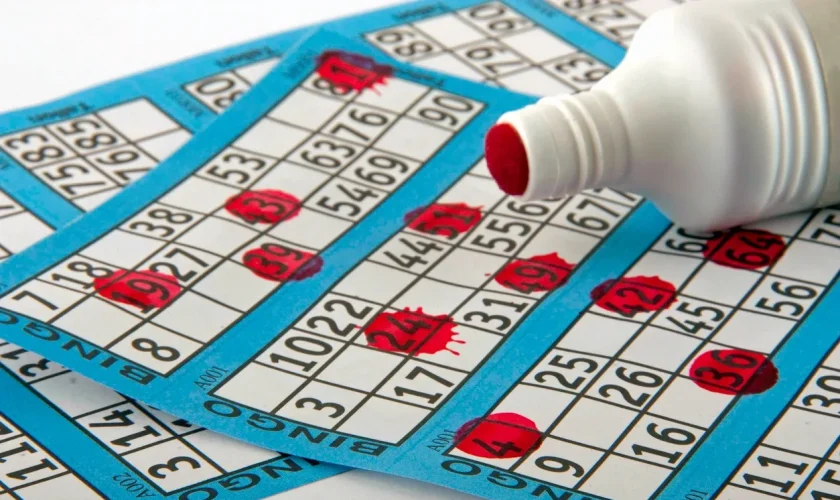
To understand the math of bingo, you must first understand the structural layout of a standard American 75-number bingo card. A traditional card consists of a five-by-five grid containing twenty-five spaces. Each space corresponds to a specific number range divided across the five columns, which spell out the word BINGO at the top.
The distribution of numbers across the columns follows a strict mathematical pattern:
-
Column B: Contains five numbers chosen randomly from the range of 1 to 15.
-
Column I: Contains five numbers chosen randomly from the range of 16 to 30.
-
Column N: Contains four numbers chosen randomly from the range of 31 to 45, with the exact center space serving as a free space.
-
Column G: Contains five numbers chosen randomly from the range of 46 to 60.
-
Column O: Contains five numbers chosen randomly from the range of 61 to 75.
Because the center space of the N column is a guaranteed free space, every standard card actually requires only twenty-four unique numbers out of the total pool of seventy-five. This grid structure sets the stage for combinatorial calculations.
Combinatorics and Unique Card Permutations
Combinatorics is the branch of mathematics focused on counting, arrangement, and combination. When applied to bingo, it allows us to calculate just how many unique cards can possibly exist within a standard 75-number game.
To find the total number of unique cards, we must calculate the possible combinations for each individual column independently and then multiply those totals together. The math involves combinations, where order does not matter, expressed mathematically as selecting $k$ items from a pool of $n$ items.
For the first column, we select 5 numbers out of a possible 15. The formula for combinations gives us a staggering number of ways to fill just that single column. When you calculate the combinations for all five columns—accounting for 5 choices out of 15 for columns B, I, G, and O, and 4 choices out of 15 for column N—the total number of unique cards that can be generated is immense.
Specifically, there are over 552 septillion possible unique bingo cards. This massive number ensures that even in massive national tournaments with millions of active players participating simultaneously, the chance of two players holding the exact same physical card layout is virtually zero.
Calculating Probabilities on the Draw
As the game progresses and balls are drawn from the machine, the probability of completing a winning pattern shifts constantly. This is a classic application of hypergeometric distribution, a probability distribution that describes the probability of $k$ successes in $n$ draws without replacement from a finite population.
At the start of a game, seventy-five balls reside in the cage. If you hold a card with twenty-four active numbers, your initial probability of having the very first called number on your card is twenty-four out of seventy-five, or roughly thirty-two percent.
As numbers are called off, the total population of remaining balls decreases. If five balls have been called and none of them matched your card, your chances on the sixth draw actually improve slightly in terms of raw percentage because the denominator shrinks, even though the overall pool of remaining targets on your card stays the same.
The Impact of Multiple Cards on Probability
Many experienced players purchase multiple cards for a single game to increase their odds of winning. Mathematically, does buying more cards scale your chances linearly?
If you play one card out of a total pool of one hundred active cards in a room, your theoretical chance of winning is one percent, assuming equal distribution. If you purchase ten cards while everyone else plays one, you now hold ten percent of the active cards in play. Your probability of winning scales directly with the proportion of total cards you control. However, buying more cards also increases your financial investment, meaning the math must always balance your cost against the statistical likelihood of winning the prize pool.
The Myth of the Due Number
One of the most persistent cognitive biases among gamblers is the gambler fallacy, which in bingo manifests as the belief that a number is due to be drawn simply because it has not appeared in a long time.
Mathematically, every single draw in a physical bingo game is an independent event. The mechanical blower does not possess a memory. If the number 7 has not been drawn in ten consecutive sessions, its mathematical probability of being drawn on the eleventh session remains exactly one in seventy-five, assuming a fresh and randomized shuffle. Understanding this independence prevents players from falling into the trap of changing their card-selection strategies based on past historical draws.
Randomness and Game Integrity
Modern commercial bingo halls and online platforms rely heavily on certified Random Number Generators or meticulously inspected physical equipment to ensure true mathematical fairness. If a system introduces bias, certain numbers or columns would appear more frequently, disrupting the hypergeometric distribution and compromising the integrity of the game. Maintaining true randomness ensures that the mathematical probabilities calculated on paper hold true in actual practice, giving every valid card an equal mathematical footing at the start of play.
Frequently Asked Questions
Why does the N column only have four numbers instead of five?
The N column contains four numbers and one central free space because the grid is symmetrical with twenty-five total squares. The center space acts as a permanent wildcard, filling one of the necessary spots for winning patterns that cross the middle row or diagonal.
Can a computer program generate a bingo card with duplicate numbers?
No, the rules of standard bingo dictate that every number within a specific column must be completely unique. Software algorithms and manual printing presses both use strict constraints to ensure no column contains a repeated value.
Does the choice of a specific card pattern change the mathematical odds?
Yes, simpler patterns like four corners or a small square require fewer numbers to be drawn, making them statistically faster to complete than complex patterns like a full blackout or a detailed picture frame.
Are electronic bingo terminals mathematically identical to paper cards?
Yes, electronic terminals generate or assign randomized digital cards that adhere to the exact same combinatorial and probability rules as traditional paper cards.
How many balls are typically used in UK and Australian bingo variants?
Standard UK and Australian bingo variants utilize a 90-number format arranged on a three-row and nine-column ticket, which features a completely different mathematical probability model compared to the American 75-number game.
Does playing in a room with fewer players improve your mathematical odds?
Playing against fewer competitors means you hold a larger percentage of the total active cards in play, which directly increases your mathematical probability of winning the specific game.
Is it possible to use card counting techniques in bingo like people do in blackjack?
No, card counting does not work in bingo because you do not know which specific cards your opponents are holding. Even if you track which numbers have been drawn, you cannot predict which remaining numbers are positioned on the cards of other active players.