
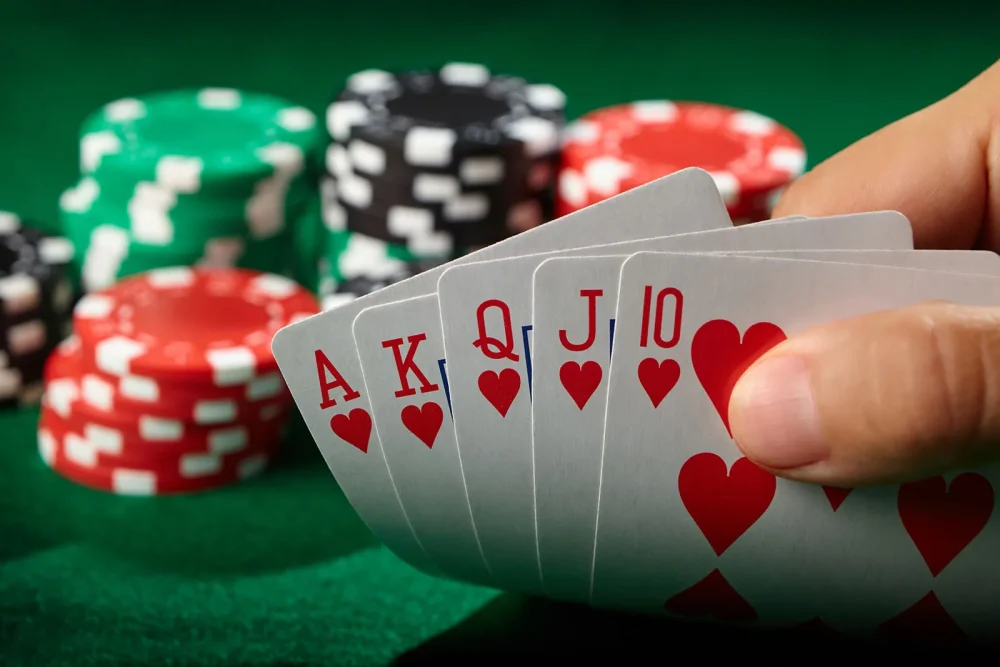
Introduction: More Than Just a Card Game
Poker is not merely a game—it’s a symphony of psychology, strategy, risk, and reward. From the smoky backrooms of old saloons to the bright lights of Las Vegas and the sleek digital tables online, poker has carved out a unique position in global gaming culture. It transcends mere chance, blending intellect with instinct, patience with boldness. For some, poker is a recreational pastime. For others, it’s a profession, a test of mental stamina and emotional control. But for all, it is undeniably captivating.
A Brief History: Poker’s Evolution Through the Ages
The roots of poker are somewhat mysterious, but its lineage draws from multiple global influences. Historians trace its origins to several games played in Europe and the Middle East.
-
The French game “Poque” and the German “Pochspiel” featured bluffing elements similar to poker
-
Persian sailors are believed to have taught a similar game, “As Nas,” to French settlers in New Orleans in the 1700s
-
As poker traveled up the Mississippi River via steamboats, it evolved into the form familiar today
By the 19th century, poker had cemented itself in American culture. The 20th century saw televised tournaments and the rise of poker celebrities. The 21st century ushered in the online poker revolution, turning casual players into millionaires overnight.
Understanding the Basics: What Makes Poker Unique
Poker is a family of card games, but its most popular variant is Texas Hold’em. In this game, each player is dealt two private cards (hole cards) and uses five community cards to form the best possible five-card hand. What distinguishes poker from most other games of chance is that players bet based on perceived strength, bluffing, and reading opponents rather than relying solely on the cards dealt.
Core elements include:
-
Bluffing: Deceiving opponents about the strength of your hand
-
Positioning: Where you sit at the table influences your advantage in each round
-
Pot Odds: Calculating the risk vs. reward of a particular call or raise
-
Bankroll Management: Controlling financial exposure over the long term
These elements combine to make poker a rich, complex, and deeply intellectual pursuit.
Types of Poker Games
Though Texas Hold’em dominates, poker offers several variants, each with its own tempo and tactics.
-
Omaha: Similar to Hold’em but players receive four hole cards and must use exactly two of them
-
Seven Card Stud: Players receive a mix of face-up and face-down cards; no community cards are used
-
Five Card Draw: The classic poker variant often portrayed in old films, where players draw cards to improve their hand
-
Razz: A lowball variant where the lowest hand wins
-
HORSE: A mixed-game format involving five different poker variants, testing a player’s all-around skill
Each format requires unique skills and strategies, attracting different types of players.
The Psychology of Poker: Reading Minds at the Table
Perhaps the most fascinating aspect of poker is its psychological depth. Unlike games that rely solely on logic or chance, poker demands emotional intelligence and sharp observational skills.
Key psychological tools include:
-
Tells: Subtle physical or behavioral cues that reveal a player’s intentions
-
Table Image: The perception other players have of your style—tight, loose, aggressive, or passive
-
Tilt Control: Avoiding emotional responses after losses to maintain rational play
-
Bluffing Dynamics: Understanding when to bluff and when to fold based on your opponent’s tendencies
Success in poker often hinges less on the cards and more on understanding the players holding them.
Online Poker: A New Frontier
The digital age has transformed poker. What once required gathering at a physical table can now be played globally, anytime and anywhere.
Advantages of online poker:
-
Accessibility: Millions of games are available 24/7 at all skill levels
-
Speed: Hands are played faster, increasing learning and engagement
-
Anonymity: Players can practice and experiment without the pressure of in-person judgment
-
Tracking Tools: Software allows for data analysis, helping players refine strategies
However, online poker lacks the physical cues and direct interaction of live games, shifting the focus even more toward mathematics, timing, and long-term trends.
Poker as a Profession: Dream or Discipline?
While many view poker as a leisure activity, for some, it’s a serious profession. Professional players study the game relentlessly, manage their finances meticulously, and often travel globally for tournaments.
Keys to professional success include:
-
Mastery of Variance: Understanding that even perfect decisions can result in short-term losses
-
Emotional Resilience: Maintaining focus during losing streaks
-
Continual Learning: Staying updated with evolving strategies and trends
-
Networking: Building relationships within the poker community to gain insights and opportunities
The professional path is glamorous to outsiders, but in truth, it demands rigor, discipline, and constant adaptation.
The Cultural Impact of Poker
Poker has left an indelible mark on global culture. It appears in literature, music, and cinema as a metaphor for risk, deception, and ambition. Characters in films like Rounders, Casino Royale, and The Cincinnati Kid use poker as a vehicle for drama and revelation. The language of poker—”all in,” “bluff,” “stacked deck”—has permeated everyday vocabulary.
Additionally, major tournaments such as the World Series of Poker (WSOP) and World Poker Tour (WPT) have elevated the game to an international spectator sport, complete with celebrity players and massive prize pools.
Responsible Poker: Balancing Risk and Reward
While poker offers excitement and the potential for significant earnings, it’s crucial to approach the game with responsibility. Gambling addiction, financial mismanagement, and emotional burnout are real risks for those who lack discipline or perspective.
Tips for responsible play:
-
Set strict bankroll limits and never play with money you can’t afford to lose
-
Avoid playing under the influence of stress, fatigue, or alcohol
-
Take regular breaks to maintain mental clarity
-
Treat losses as part of the game—not personal failures
Understanding poker’s risks is just as important as mastering its mechanics.
Conclusion: The Enduring Legacy of Poker
Poker is a game of contrasts—simple to learn, yet impossible to master; shaped by chance, yet governed by choice. It challenges the intellect, sharpens emotional acuity, and rewards patience and courage. Whether you’re bluffing with a weak hand or folding the best cards in the room, poker teaches lessons that extend far beyond the table.
In every shuffle, deal, and raise lies a story waiting to unfold. And in poker—as in life—it’s not just about the hand you’re dealt, but how you choose to play it.