
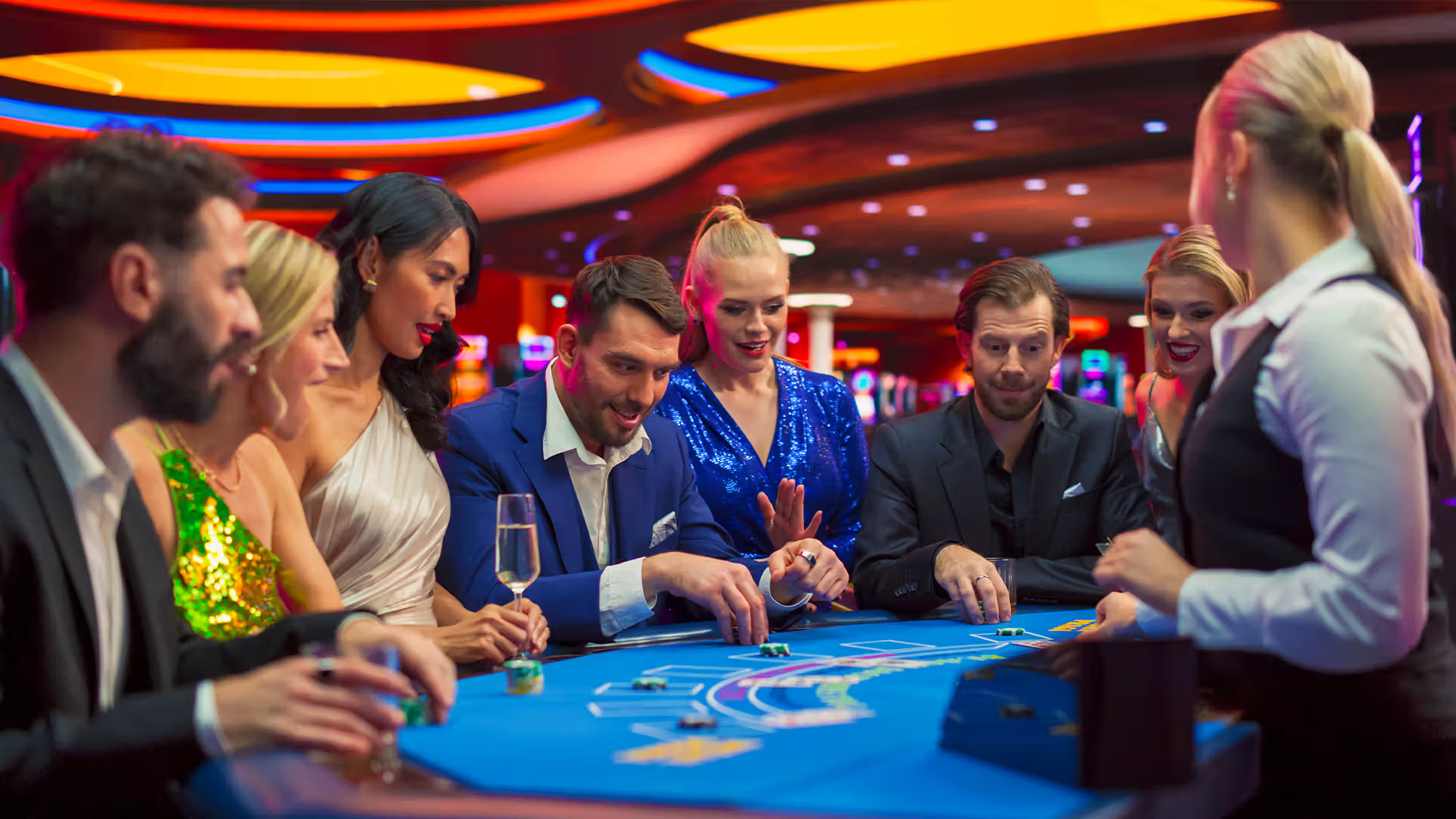
Popular culture has long romanticized casino gambling as a theater of psychological warfare. Cinematic depictions of card games usually feature high-stakes players wearing sunglasses indoors, staring down opponents across a felt table, and executing masterful bluffs to steal a pot. When people think of bluffing, games like poker immediately come to mind. In poker, deception is a core pillar of strategy because you are competing directly against other human beings, manipulating their perceptions, and hiding the true strength of your hand.
When it comes to blackjack, however, the dynamic shifts entirely. You are not playing against the other people sitting at your table; you are playing exclusively against the dealer and the fixed mathematical house edge. Because of this structural reality, traditional poker-style bluffing does not exist in standard blackjack. You cannot trick the dealer into folding a superior hand by projecting confidence or acting like you hold a twenty when you actually hold a twelve. The dealer follows rigid, programmed rules that do not care about your composure, your nervous sweat, or your theatrical composure.
Yet, despite the mathematical irrelevance of deception against the house, human psychology still plays a massive role at the blackjack table. Playing cool, managing your internal emotional state, and projecting a calm exterior are vital skills for maintaining discipline, protecting your bankroll, and navigating the complex social dynamics of a crowded casino floor.
Why Traditional Bluffing Fails in Blackjack
To understand the psychology of composure in blackjack, you must first recognize why trying to bluff the game itself is completely futile. In poker, a bluff succeeds when you convince your opponents that your hand is better than theirs, causing them to surrender their cards.
The blackjack dealer operates without emotion, intuition, or fear. Whether you slam your chips down with arrogant swagger or gently signal a hit with a trembling finger, the dealer treats your hand with identical mechanical precision. If you hold a hard sixteen against a dealer ten, the correct basic strategy play is to hit. Displaying supreme confidence while hitting that sixteen will not prevent the deck from delivering a ten and busting your hand. The math remains entirely indifferent to your psychological state.
Furthermore, other players at the table have no direct financial stake in your individual outcome. If you make a terrible play—such as standing on a twelve against a dealer face card—you might invite frustrated groans from your tablemates because bad plays by one player can theoretically alter the sequence of cards dealt to subsequent seats. However, trying to bluff or trick your fellow players into accepting your erratic style serves no strategic purpose and usually just creates unnecessary social friction.
The Real Purpose of Playing Cool: Emotional Regulation
While you cannot bluff the dealer, maintaining a cool and collected demeanor is essential for managing your own internal psychology. Gambling environments are specifically engineered to trigger emotional highs and lows. Flashing lights, ringing slot machines, cascading chips, and the rapid swing of winning and losing streaks can easily hijack your rational decision-making pathways.
When emotions run high, cognitive biases take over. A string of three consecutive losses can trigger frustration, leading to the impulse to abandon basic strategy and start doubling bets recklessly to recover lost ground. This emotional volatility is precisely how the house edge compounds its advantage over distracted players.
Benefits of Staying Calm Under Pressure
-
Preservation of Rational Thought: A calm mind relies on pre-calculated mathematical probabilities rather than knee-jerk emotional reactions.
-
Resistance to Tilt: Emotional detachment helps you accept variance without letting a temporary bad run ruin your focus or your evening.
-
Consistent Bankroll Management: When you remain cool, you stick strictly to your predetermined unit sizes and stop-loss limits.
The Social Psychology of the Table
Even though you are playing against the house, blackjack is rarely a solitary experience. Most of the time, you share a semi-circle of felt with four to six complete strangers. Human beings are inherently social creatures, and the collective energy of a table can heavily influence individual behavior.
When a table is running hot and everyone is winning, the atmosphere is electric. Conversely, when the dealer goes on a multi-hand winning streak and wipes out the table’s chips, tension rises instantly. Some players start blaming each other, complaining about the dealer, or making superstitious rituals out of sheer desperation.
Projecting a cool, steady demeanor in these high-tension moments positions you as a stabilizing force at the table. You avoid getting sucked into the collective anxiety or superstition of struggling players. Maintaining this psychological boundary allows you to stick to your strategy regardless of whether the table is celebrating a win or weathering a cold streak.
Managing Table Image and Etiquette
Although you cannot intimidate the dealer, how you present yourself at the table dictates how other people treat you. Casinos are social ecosystems filled with pit bosses, dealers, and fellow patrons. Cultivating a relaxed, courteous, and composed persona creates a much more pleasant gaming environment for everyone involved.
Loud outbursts, aggressive trash-talking, or visible anger over a lost hand draw unwanted attention from security and pit staff. On the flip side, playing with quiet confidence signals that you are an experienced player who understands the game, respects the rules, and manages your money responsibly.
Key Habits for a Composed Table Presence
-
Handle Chips Smoothly: Practice picking up and organizing your chips without fidgeting nervously or dropping them constantly.
-
Use Clear Hand Signals: Make definitive, calm hand gestures for hitting, standing, doubling down, or splitting to eliminate ambiguity with the dealer.
-
Accept Swings Gracefully: Smile or remain neutral whether you win a massive double down or lose a routine hand.
The Danger of Overconfidence
Just as panic and tilt are dangerous, the opposite end of the psychological spectrum—overconfidence or arrogance—carries its own hidden traps. Some players adopt a tough-guy persona or a faux-professional attitude, believing that projecting supreme dominance over the table will somehow influence the cards.
Overconfidence often leads to hubris, which manifests as abandoning strict card counting discipline, ignoring basic strategy charts, or increasing bet sizes far beyond safe bankroll limits because you feel invincible. True mastery in blackjack looks boring from the outside. It is characterized by quiet concentration, adherence to mathematical guidelines, and a steady, unshakeable rhythm.
Frequently Asked Questions
Can other players at the table actually ruin my chances of winning?
Mathematically, over the long term, other players’ decisions have a neutral impact on your expected return. While a poorly timed hit by another player might occasionally take a bust card that would have gone to the dealer, it is just as likely to help you. Individual hands balance out over thousands of rounds.
Why do some blackjack players wear sunglasses inside casinos?
Some players wear sunglasses to block out the harsh casino lighting and minimize visual distractions, allowing them to focus entirely on their cards and chips. While it gives off a poker-player vibe, it has no mathematical impact on the game.
How can I stop myself from getting angry after a bad beat?
The best defense against anger is strict bankroll management. If you only gamble with money you have fully budgeted and accepted as the cost of entertainment, losing a hand stings far less and prevents emotional frustration.
Does table superstition like changing seats actually work?
No, changing seats, switching tables, or waiting for a specific dealer change has zero mathematical effect on the probability of the cards. The deck is either shuffled randomly or dealt from a continuous shuffling machine, making past outcomes irrelevant.
What is the single most important psychological trait for a winning blackjack player?
Discipline is far more important than any other trait. The ability to execute basic strategy flawlessly, hour after hour, without letting boredom, fatigue, or emotion interfere is what separates disciplined players from impulsive gamblers.
How do professional blackjack players handle long losing sessions?
Professionals view losses as a normal statistical variance built into the game. Because they manage large bankrolls designed to absorb downswings, a bad session does not cause emotional panic or alter their betting strategy.
Is it acceptable to talk to the dealer during a hand?
Friendly, lighthearted conversation is generally welcomed by dealers, provided it does not slow down the game or distract them from making accurate payouts and card distributions. However, avoid asking the dealer for strategic advice during active play.